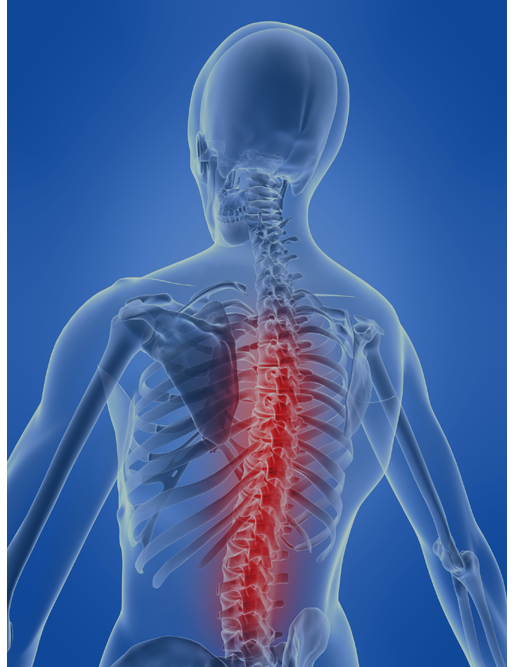
Frequently Asked Questions About Spinal Decompression Tampa, Florida
If I undergo Spinal Decompression treatment, how long does it take
to see results?
Most patients report a reduction in pain after the first few sessions. Typically,
significant improvement is obtained by the second week of treatment.
How long does it take to complete Spinal Decompression treatment?
Patients remain on the system for 30-45 minutes, daily for the first 2 weeks, three
times a week for the following 2 weeks, and followed up by two times a week for the last
2 weeks.
Do I qualify for Spinal Decompression treatment?
Obviously proper patient selection is essential to favorable outcomes, so let me explain
to you of the Inclusion and Exclusion criteria so you may make the right decision since
not everyone qualifies for Spinal Decompression treatment.
Inclusion Criteria:
Pain due to herniated and bulging lumbar discs that is more than four weeks
old
Recurrent pain from a failed back surgery that is more than six months old.
Persistent pain from degenerated disc not responding to four weeks of therapy.
Patients available for four weeks of treatment protocol.
Patient at least 18 years of age.
Exclusion Criteria:
Appliances such as pedicle screws and rods
Pregnancy Prior lumbar fusion less than six months old
Metastatic cancer
Severe osteoporosis Spondylolisthesis (unstable)
Compression fracture of lumbar spine below L-1 (recent).
Pars defect
Pathologic aortic aneurysm.
Pelvic or abdominal cancer
Disc space infections
Severe peripheral neuropathy
Hemiplegia, paraplegia, or cognitive dysfunction
Are there any side effects to the treatment?
Most patients do not experience any side effects. Though, there have been some mild
cases of muscle spasm for a short period of time.
How long does it take to complete Spinal Decompression
treatment?
Patients remain on the system for 30-45 minutes, daily for the first 2 weeks, three
times a week for the following 2 weeks, and followed up by two times a week for the last
2 weeks.
How does Spinal Decompression separate each vertebra and allow for
decompression at a specific level?
Decompression is achieved by using a specific combination of spinal positioning and
varying the degree and intensity of force. The key to producing this decompression is
the gentle pull that is created by a logarithmic curve. When distractive forces are
generated on a logarithmic curve the typical proprioceptor response is avoided. Avoiding
this response allows decompression to occur at the targeted area.
Is there any risk to the patient during treatment on Spinal
Decompression?
NO. Spinal Decompression is totally safe and comfortable for all subjects. The system
has emergency stop switches for both the patient and the operator. These switches (a
requirement of the FDA) terminate the treatment immediately thereby avoiding any
injuries.
How does Spinal Decompression treatment differ from ordinary spinal traction?
Traction is helpful at treating some of the conditions resulting from herniated or
degeneration. Traction cannot address the source of the problem. Spinal Decompression
creates a negative pressure or a vacuum inside the disc. This effect causes the disc to
pull in the herniation and the increase in negative pressure also causes the flow of
blood and nutrients back into the disc allowing the body's natural fibroblastic response
to heal the injury and re-hydrate the disc. Traction and inversion tables, at best, can
lower the intradiscal pressure from a +90 to a +30 mmHg. Spinal Decompression is
clinically proven to reduce the intradiscal pressure to between a -150 to -200 mmHg.
Traction triggers the body's normal response to stretching by creating painful muscle
spasms that worsen the pain in affected area.
Can Spinal Decompression be used for patients that have had spinal
surgery?
In most cases Spinal Decompression treatment is not contra-indicated for patients
that have had spinal surgery. In fact many patients have found success with Spinal
Decompression after a failed back surgery.
Who is not a candidate for Spinal Decompression therapy?
Anyone who has recent spinal fractures, surgical fusion or metallic hardware, surgically
repaired aneurysms, infection of the spine, and/or moderate to severe osteoporosis.
Who is a candidate for Spinal Decompression?
Anyone who has been told they need surgery but wishes to avoid it, anyone who has been
told there is nothing more available to help, anyone who failed to significantly respond
to conservative options (medications, physical therapy, injections, chiropractic,
acupuncture), or anyone who still has pain but wishes to obtain the type of care they
want.